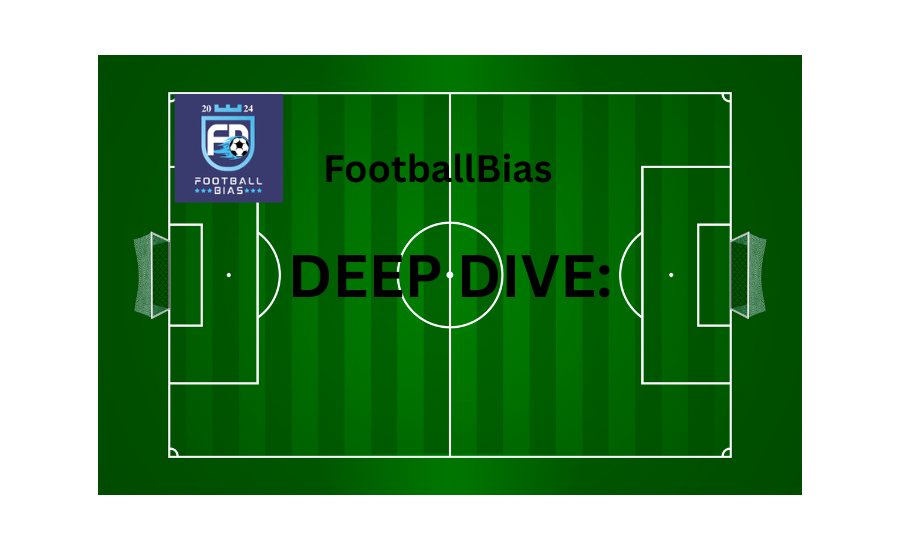
Football is increasingly decided by where actions take place, not just by who has the ball. To understand this, analysts often divide the pitch into an 18-zone system. The pitch is split into three vertical lanes, left, centre, and right, and six horizontal rows from one goal to the other.
This structure helps explain why some areas feel safe while others feel dangerous. Traditional thirds do not capture this difference. A pass in the middle of the pitch can be harmless in one area and decisive in another. The 18-zone model highlights those contrasts clearly.
Rather than tracking individual movements, the grid focuses on space. It shows where teams build attacks, where pressure builds, and where games are usually decided. It is not about rigid positioning, but about understanding which areas of the pitch matter most at different moments.
The deepest zones are where teams protect themselves first. Losing the ball here often leads directly to chances for the opponent, so decisions are simple and controlled.
Zones 1 and 3, the wide defensive areas, are commonly used to move the ball away from central pressure. Fullbacks receive here to reset play or move forward along the touchline. The risk increases when teams stay too long in these areas, as passing options narrow and pressure arrives quickly.
Zone 2, the central defensive area, is the most dangerous place to lose possession. Centre-backs and goalkeepers operate here with the priority of security. Clearances and safe passes are preferred over risk.
Zones 4 and 6 act as the first step forward. The ball is moved here to escape pressure and progress play without exposing the centre. These areas are not about creativity, but about stability.
Zone 5 sits between defence and midfield. The defensive midfielder operates here to connect play, offer a safe option, and keep the team balanced.
The middle zones determine how a match feels. Control here allows teams to manage tempo, limit transitions, and choose when to attack.
Zones 8 and 11 are heavily contested. Multiple players operate here, and space is limited. Teams that circulate the ball cleanly in these areas often control the rhythm of the game.
Zones 7 and 10, the wide areas, stretch the pitch. They force defenders to spread out, creating room elsewhere. These zones are used to maintain width rather than create immediate danger.
Zones 9 and 12 sit just inside those wide areas. These spaces allow attackers to receive between defenders and turn play toward the centre. They are often used to shift defences out of shape before a final action.
The attacking zones are where control becomes decisive. Actions here carry higher reward and greater consequence.
Zone 14, the central area just outside the box, is the most influential space on the pitch. From here, players can shoot, play final passes, or draw defenders out of position. Defensive responsibility is shared in this area, which creates hesitation and openings.
Zones 13 and 15 sit to either side of Zone 14. They allow attackers to play across the defence rather than around it. Passes from these zones often break defensive lines and lead directly to chances.
Zones 16 and 18 are wide areas close to the box. They are used to pull defenders away from the centre. The goal is often not to cross early, but to create space for cut-backs.
Zone 17, the penalty box, is where attacks end. Most goals are scored here, often as the result of earlier positioning rather than individual brilliance.
Some zones carry more importance than others. Deep zones demand caution because mistakes are costly. Middle zones shape the flow of the game but rarely decide it on their own.
The most valuable zones are central and advanced. Accessing them forces defensive decisions and increases the chance of clear outcomes. The best teams do not rush into these areas. They prepare for them.
Quality is shown not by how often a team reaches certain zones, but by how well they use them when they do.
Modern football is organised around space. Coaches instruct players to maintain spacing, avoid crowding, and arrive in key areas at the right time.
The 18-zone grid offers a clear way to understand this. It shifts focus from constant movement to spatial control. It explains why some attacks feel inevitable and others fade away.
Thinking in zones helps explain how matches are controlled, how chances are created, and why certain areas of the pitch decide outcomes more than others.